


Archive & Storage


This is the storage end of the filing system, where documents go when the working day with them is done, from this year's accessible shelf to the seven-year archive. Start with archive boxes if the records are leaving the desk for good.
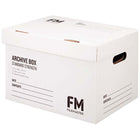
Storage boxes are open-topped and built for files you still reach into regularly. Archive boxes have lids — usually hinged and attached — and are built for stacking records you must keep but rarely touch. If you'll open it monthly, storage box; if you'll open it next financial year, archive box.
Pack by destruction date, not just by topic. NZ businesses keep most records seven years for Inland Revenue, so labelling each box with its contents and the year it can be destroyed turns the annual purge into reading labels rather than opening boxes. One box colour per year speeds it up further.
Yes — suspension-file storage boxes like the Marbig Ezystack have rails inside, so files lift from a cabinet drawer straight into the box still on their hangers, still in order. The clear-lid versions keep contents identifiable on the shelf without opening anything.
Three to four boxes high is the safe working range for full-paper boxes, heaviest at the bottom. For the bottom layers of a deep stack — or boxes full of dense print — the reinforced Super Strong archive boxes are built for exactly that load. Jumbo boxes are better kept for bulky-but-light contents, since a jumbo full of paper is a two-person lift.
Yes — archive and storage boxes ship flat in multi-packs and fold up as you need them. Quickfold archive boxes assemble without tape, and the rest fold together in under a minute. Flat packs store in a cupboard until archive season, which is why most offices buy a year's worth at once.
Match the box to the file's age
A document's life has three shelves
First it's active and lives at the desk. Then it's reference — finished, but still consulted — and belongs in open storage where it can be reached without lifting a lid. Finally it's a record: kept because Inland Revenue says so, opened almost never. This collection covers all three stages, which is why it's the largest page in the filing department — and why the right buy depends less on the box than on the age of the paper going into it.
Open boxes while files are alive
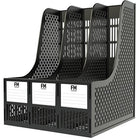
For the reference stage, open-top storage boxes keep files upright, visible and one motion from your hand. The FM range runs both A4 and foolscap — foolscap being the size to pick when folders carry tabs or fasteners that stand proud of the page — in white, kraft and six colours, so one colour per department or year reads from across the room. Slim material that won't stand on its own goes upright in magazine holders, from flat-packed cardboard to polypropylene and mesh.
Lidded boxes when the file retires
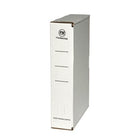
Records headed for the seven-year shelf go into archive boxes. Most use a one-piece hinged lid that stays attached when you go back into the box; Marbig's Enviro transfer boxes use a separate lift-off lid for records that travel between sites; Quickfold versions assemble without tape; and the Super Strong line carries the bottom of a heavy stack. Sizes run standard, medium, jumbo and super — and the discipline that makes it all work is writing a destruction year on every box the day you pack it.
Hanging files move box and all
A filing cabinet drawer doesn't have to be unloaded file by file. Rail-fitted boxes like the Marbig Ezystack take suspension files straight from the drawer, still on their hangers, still in sequence, with a clear lid that makes the contents legible on the shelf. It's the difference between archiving a drawer and burying one.
Off the shelf entirely
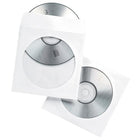
Wall pockets put forms, dockets and handouts at the point of use — corridors, clinics, workshop walls — and stack downward as paperwork grows. CD and DVD sleeves consolidate the last of the optical media into a fraction of its shelf space. Upstream of all of it sits the rest of filing and storage: the folders, binders and cabinets the documents come from. Boxes ship flat-packed in multi-packs, orders over $30 deliver free NZ-wide, and bulk archive orders qualify for Business Pass account pricing with monthly invoicing — credit accounts settle on the 20th.


